
Frozen shoulder and rotator cuff tears have similar symptoms but different treatments. Distinguishing them with ultrasound comes first.
A shoulder you 'cannot lift' (frozen shoulder) and a shoulder you 'do not lift because it hurts' (rotator cuff) call for different treatment. If the arm does not go up even when someone else lifts it, it points to frozen shoulder; if it goes up when someone else lifts it but hurts when you lift it yourself, it points to the tendon. Night pain that aches and wakes you occurs in both, so an ultrasound check is needed.
At Jeju Team Doctor Orthopedic Clinic, a board-certified physiatrist with extensive ultrasound experience examines the shoulder together with board-certified orthopedic and pain medicine specialists. We check the tendons, calcium deposits, and bursa on the same day and proceed step by step through range-of-motion recovery and strength rehabilitation.
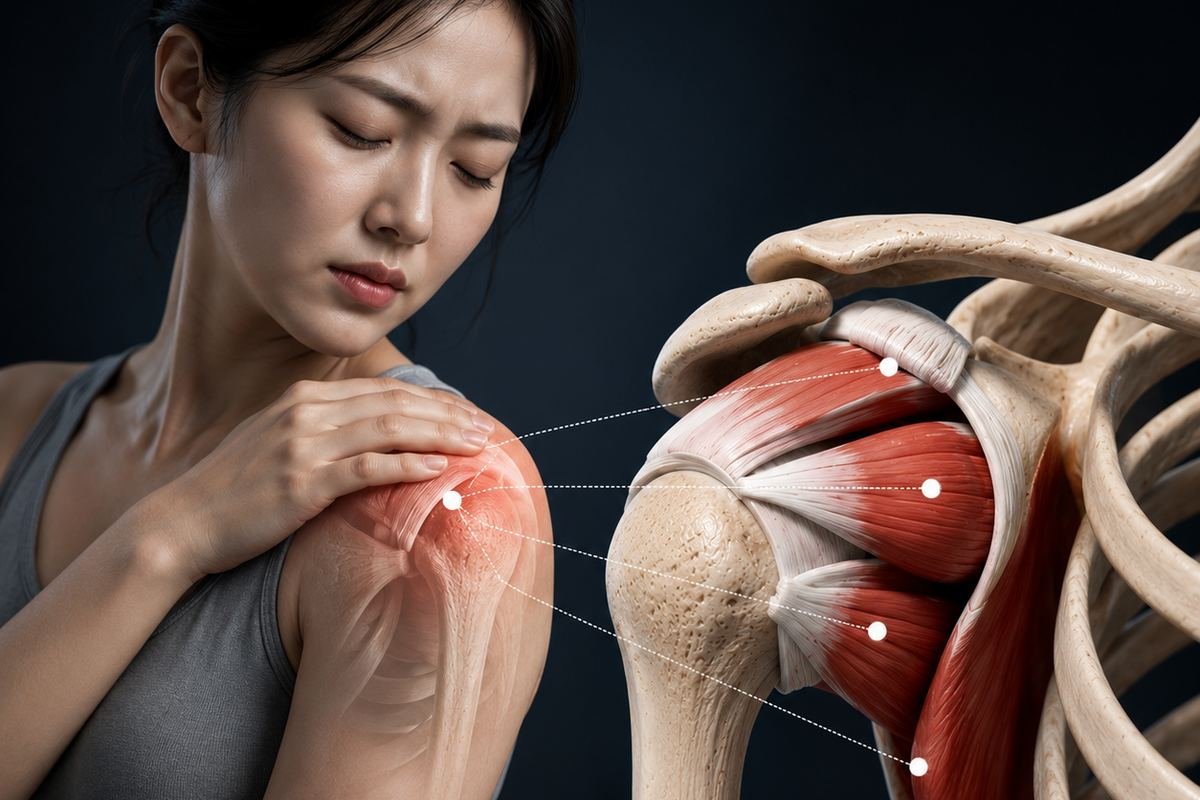
The main distinctions are 'which directions are limited' and 'does it go up when someone else lifts it'.
With the shoulder, ultrasound can show a great deal on the spot. We do the examination and ultrasound on the same day.
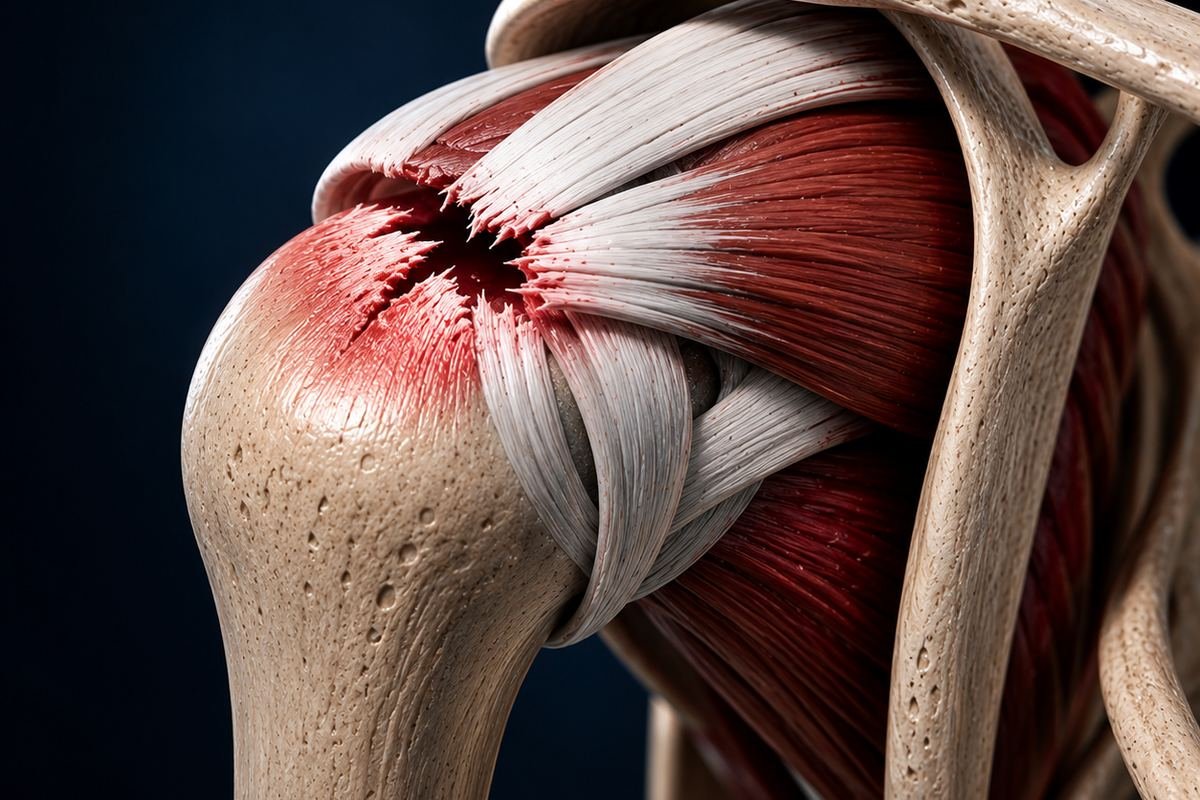
Frozen shoulder is treated by 'loosening what has stiffened'; the rotator cuff is treated by 'protecting the tendon while rebuilding strength'.
The criterion for returning to activity is 'can you do overhead movements without pain'.
The shoulder is a joint where treatment drags on if the cause is misjudged. That is why, on the first day, we show you the tendons and calcium deposits directly on ultrasound and start by confirming together whether it is frozen shoulder or a tendon problem.

A guide to pain by body area from Jeju Team Doctor Orthopedic Clinic. View all conditions
Treatment of the shoulder is shorter when frozen shoulder, rotator cuff, and calcium deposits are sorted out first. Jeju Team Doctor Orthopedic Clinic tracks range of motion and strength in numbers and sees you through the stages of returning to harvesting, golf, or diving.
If you are in Jeju and your shoulder hurts when you raise your arm or aches and wakes you at night, try having someone else lift your arm and see whether it goes up before you come in. That is where the diagnosis begins.
This page is intended to provide general medical information. Individual diagnoses and treatment methods are determined after an examination. Treatment outcomes and recovery times may vary from person to person.